
The speed at which he led the central bank in different areas -- ranging from internal reorganisation to inflation fighting, stabilising the currency, taking on rogue corporations, cleaning up bank balance sheets, and opening the sector -- makes one believe that Rajan knew he had only three years to do his job. A fascinating excerpt from Tamal Bandyopadhyay's MUST-READ Roller Coaster: An Affair with Banking.

'The prime minister should not have involved himself in these negotiations.' 'If he had not got himself involved and allowed only his ministers to talk to the farmers, things would have not reached this stage.'

The Modi government is notoriously honest about one fact: It does not listen to economists, observes Shekhar Gupta.

'An ambassador may not be sure whether there would be a war next month, but prudence requires him to take action to see to it that people leave early.' 'Because once the war starts, it will be very difficult to move out.'

If the government of the day would like to set in place a smooth and well-planned changeover and facilitate the incoming chief to chalk out his action plan well in advance, the announcement of a successor needs to be done early, observes Colonel K Thammayya Udupa (retd).
It is in no way a government of the economic Right. The Right is limited to religion and nationalism. The rest is as Left as the Congress or any other party, observes Shekhar Gupta.
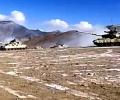
Once the tanks roll back, a zero-based assessment of future equations with China is necessary. Given the conflict situations that China is imposing on India time and again, the red, amber and green lines of interactions with China need to be laid down and communicated in no uncertain terms, asserts Srikanth Kondapalli, the leading China expert.

Many associations of urban dwellers across the country are assuming powers they do not possess and behaving like tinpot dictators, says Shuma Raha.

If the Opposition has any chance at the prime minister's job, it can happen only if they all stop dropping names and work at the grassroots-level, state-wise, suggests N Sathiya Moorthy.

India's most powerful prime minister in five decades gets publicly admonished -- if gently -- by the US vice-president. The question is, would this make him reflect on how and why, or which ones of his government and party's missteps exposed his flank like this? asks Shekhar Gupta.

A fascinating excerpt from Arghya Sengupta, Jinaly Dani, Kevin James, and Pranay Modi's Hamn Ast: A Biography of Article 370.Instead came a recommendation from Parliament, acting under the imposition of President's Rule, purporting to convey the views of the people of Jammu and Kashmir. This clever act achieved Parliament's purpose optimally. But was it legitimate in law?

'In the Indian context it is not easy for rival parties to come together, especially pre-elections.' 'Having pulled it off, they should be taken seriously.'
